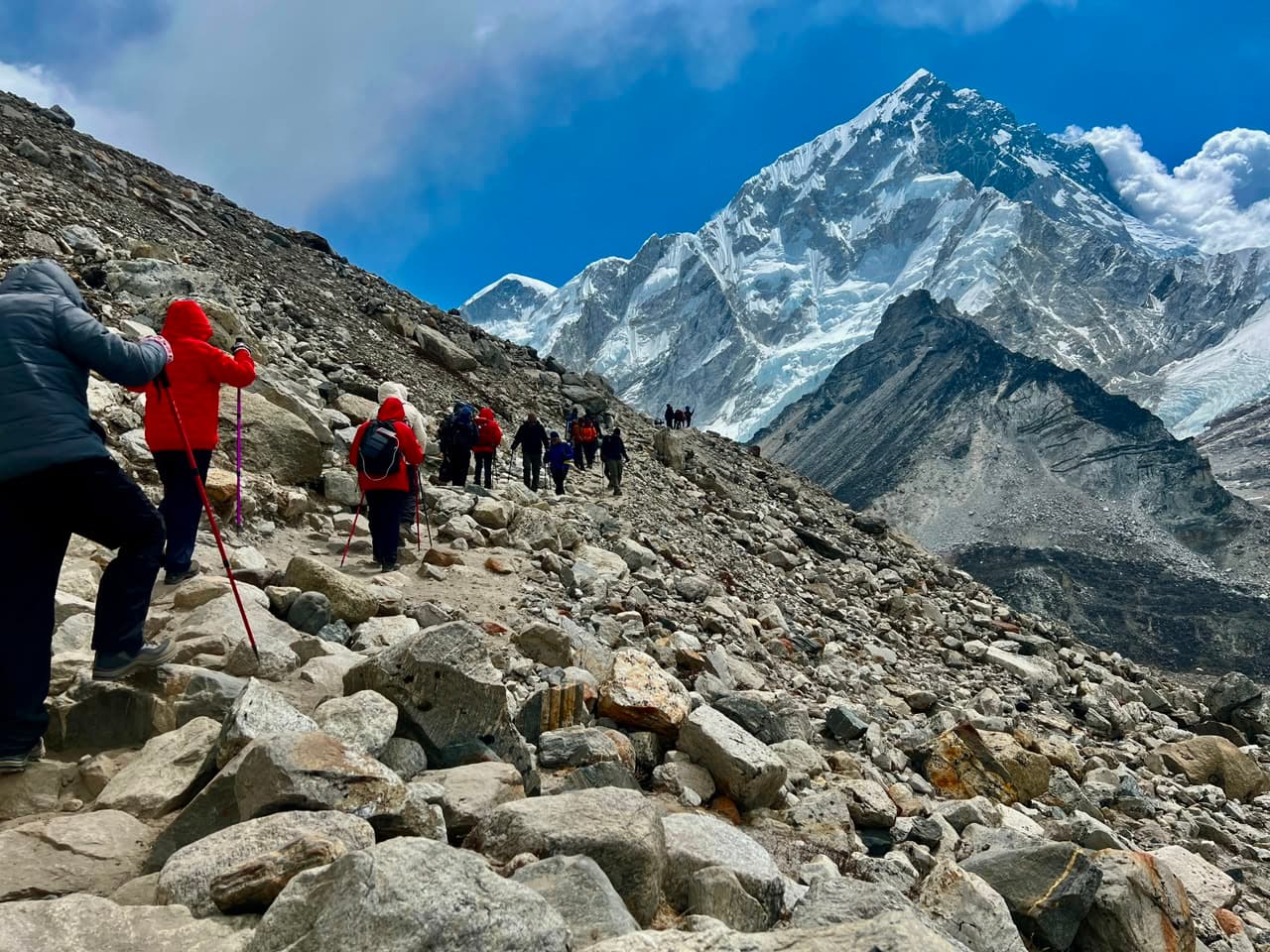
Nepal trekking13 min read
Trekking in Nepal in October and November 2026: Weather, Best Routes, Costs and Expert Tips
October and November are Nepal’s prime autumn trekking months, bringing clearer post-monsoon skies, excellent Himalayan visibility and generally stable trail conditions. This guide compares the best autumn treks in Nepal and explains the weather, temperatures, permits, crowds, costs, packing and safety considerations travelers should understand before booking.
Himalera Team
Himalera editorial team · Published September 10, 2026
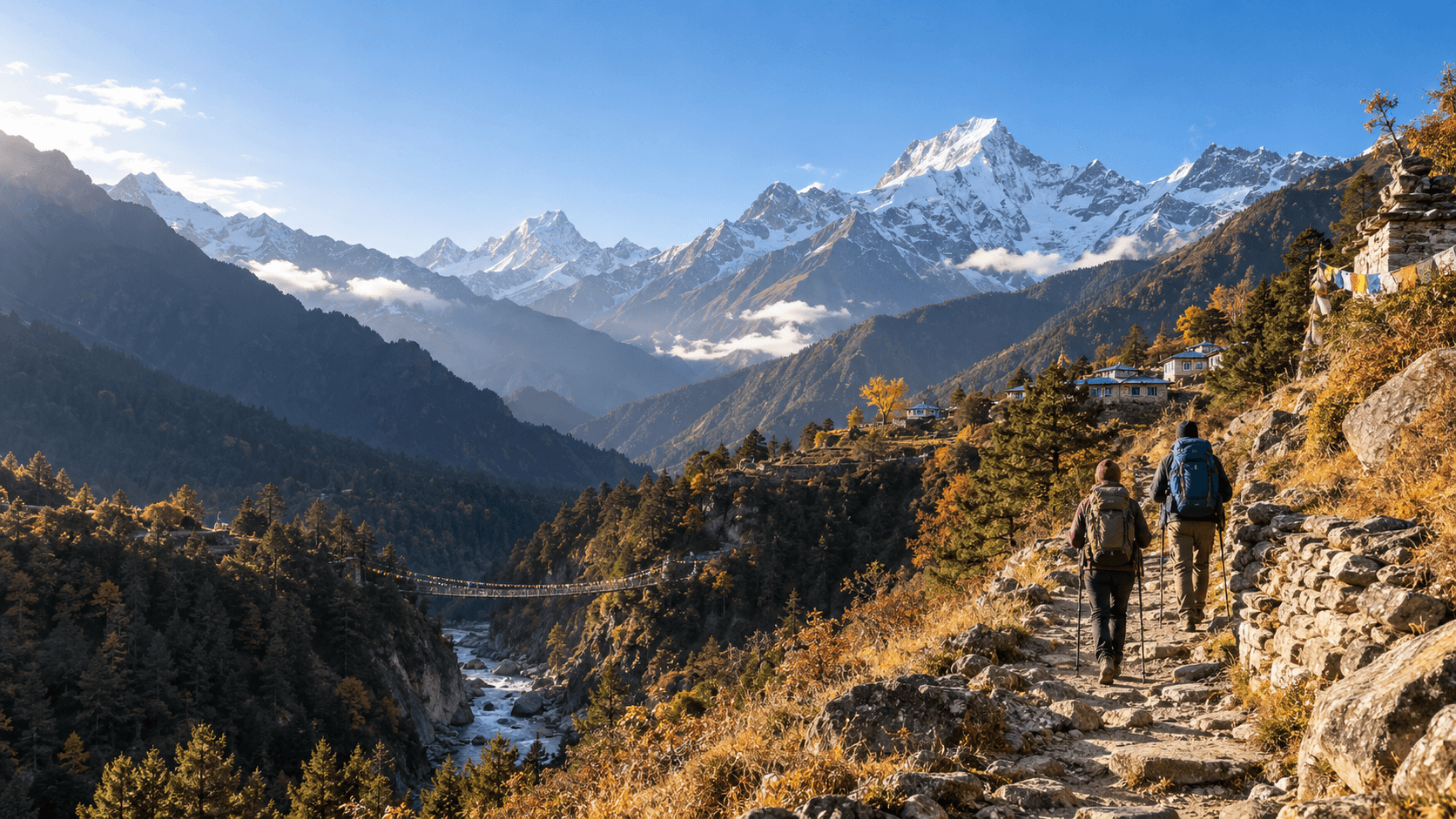
Trekking in Nepal in October and November 2026
October and November are generally the best months for trekking in Nepal. The summer monsoon retreats, humidity decreases and clearer skies reveal the Himalayas across the Everest, Annapurna and Manaslu regions. Days are often comfortable for walking, although nights become cold—and sometimes fall below freezing—at higher elevations.
For most travelers, October offers warmer conditions and a livelier atmosphere, while November usually provides colder mornings, fewer trekkers later in the month and exceptionally crisp mountain views. The right month depends on your preferred route, tolerance for cold and attitude toward crowds.
Quick answer: Is October or November better for trekking in Nepal?
Choose October if you want warmer days, busy trekking villages and the widest selection of departures. Choose November if you prefer quieter trails, sharper mountain visibility and do not mind colder nights.
Both months are excellent, but neither guarantees perfect weather. Himalayan conditions can change quickly, particularly above 4,000 metres. Every itinerary should retain some flexibility for weather, road conditions and mountain flights.
October versus November at a glance
Factor October November
General conditions Mild, mostly stable and increasingly dry Dry, clear and noticeably colder
Mountain visibility Excellent after the monsoon clears Frequently outstanding
Trail traffic Highest during the main weeks Busy early, quieter later
High-altitude nights Cold, sometimes below freezing Regularly below freezing
Tea-house availability Advance booking strongly recommended Usually easier later in the month
Best for First-time visitors and warmer trekking Clear views and relatively quieter trails
Main consideration Popular routes can feel crowded Shorter days and colder mornings
Why autumn is Nepal’s main trekking season
Nepal receives most of its annual rainfall during the summer monsoon. As that system withdraws, the atmosphere becomes drier and mountain visibility generally improves. According to the Nepal Tourism Board, the clearest skies are commonly found after the monsoon in October and November.
Autumn conditions make long trekking days more comfortable and reduce many of the rain-related difficulties found earlier in the year. Trails are usually drier, mountain lodges operate at full capacity and regular trekking departures are easier to arrange.
However, “best season” does not mean risk-free. Rain can continue into early autumn, and strong winds, snowfall or storms can affect high passes at any time. Climate patterns are becoming less predictable, so a reliable local forecast matters more than a historical monthly average.
What is the weather like in October?
October normally marks the transition into settled post-monsoon weather. Lower valleys can remain pleasantly warm during the day, while the air becomes progressively colder as the trail gains altitude.
Early October can occasionally retain cloud or rain from a late monsoon. By the middle of the month, travelers often experience clearer mornings, dry paths and broad mountain views. High-altitude settlements and passes can still receive snow.
Typical experience:
Comfortable walking temperatures at lower and middle elevations
Cool mornings and evenings
Cold or freezing nights above approximately 4,000 metres
Stronger sunlight and ultraviolet exposure at altitude
A possibility of rain, snow or flight disruption despite generally stable conditions
What is the weather like in November?
November is usually drier and colder than October. Morning visibility can be remarkably clear, while evening temperatures fall quickly after sunset. Conditions toward the end of November can feel wintry at higher elevations.
Trekkers should expect frost, frozen water bottles and sub-zero nights on routes such as Everest Base Camp, the Annapurna Circuit and Manaslu Circuit. Snowfall is possible around high passes, even when lower valleys remain sunny.
Typical experience:
Crisp mornings and excellent long-distance visibility
Dry conditions on many established trails
Colder tea-house rooms and early starts
Shorter daylight hours than October
Possible snow or ice around Thorong La, Larkya La and other high points
Temperature figures found online should be treated as planning estimates rather than forecasts. Elevation, wind, sun exposure and local geography can create significant differences within the same trekking region.
Best treks in Nepal for October and November
1. Everest Base Camp Trek
Best for: First-time Himalayan trekkers seeking Nepal’s most iconic high-altitude journey
Highest overnight destination: Everest Base Camp area, approximately 5,364 metres
Recommended trip window: Around 14–16 days with suitable acclimatization
The Everest Base Camp Trek combines mountain scenery with Sherpa culture, Buddhist monasteries and legendary settlements including Namche Bazaar, Tengboche, Dingboche and Lobuche.
Autumn brings broad views of Everest, Lhotse, Ama Dablam, Nuptse and Thamserku. October is particularly lively, while November can offer clearer and quieter conditions at the cost of colder nights.
The route is physically demanding, but technical climbing skills are not required. The greatest challenge is altitude. A responsible itinerary should include acclimatization days and avoid rapid elevation gain.
Travelers should also keep contingency time for flights between Kathmandu or Ramechhap and Lukla. Mountain flights depend on visibility and can be delayed.
Explore the Everest Base Camp Trek
2. Annapurna Base Camp Trek
Best for: Trekkers seeking a varied landscape and a shorter base-camp experience
Maximum elevation: Approximately 4,130 metres
Recommended trip window: Around 9–12 days
The Annapurna Base Camp Trek enters the Annapurna Sanctuary through forests, villages, river valleys and steep stone staircases. The final amphitheatre is surrounded by Annapurna I, Annapurna South, Hiunchuli, Gangapurna and Machhapuchhre.
October normally brings active trails and comfortable lower-elevation temperatures. November is colder but often rewards trekkers with crisp views. The route is lower than Everest Base Camp but still enters an altitude where sickness is possible.
Sections of the trail can remain wet or muddy in early October after the monsoon. Good footwear and trekking poles are useful on steep descents.
Explore the Annapurna Base Camp Trek
3. Annapurna Circuit Trek
Best for: Landscape variety, village culture and a dramatic high-pass crossing
Highest point: Thorong La, approximately 5,416 metres
Recommended trip window: Around 12–18 days, depending on the starting and finishing points
The Annapurna Circuit travels from subtropical valleys toward the dry landscapes of Manang and Mustang. Its central challenge is crossing Thorong La, one of Nepal’s best-known trekking passes.
October and early November are preferred because the pass is more likely to have manageable conditions than in winter. Nevertheless, snow, wind and ice can develop rapidly. The crossing should only be attempted after proper acclimatization and with a favorable local forecast.
Because October is busy, accommodation in Manang, Yak Kharka, Thorong Phedi and High Camp may fill quickly.
Explore the Annapurna Circuit Trek
4. Manaslu Circuit Trek
Best for: Experienced trekkers looking for a quieter and more remote circuit
Highest point: Larkya La, approximately 5,106 metres
Recommended trip window: Around 14–18 days with acclimatization
The Manaslu Circuit follows the Budhi Gandaki before climbing toward Tibetan-influenced settlements beneath Mount Manaslu. It offers a more remote atmosphere than the Everest and central Annapurna routes.
October is the busiest and generally warmest autumn month on the circuit. November can be quieter, but temperatures near Samagaon, Samdo and Dharamsala become considerably colder.
Manaslu is a restricted trekking area. Foreign visitors must arrange the applicable restricted-area and conservation permits through an authorized trekking agency and comply with current guide and group requirements.
For September through November, the Nepal Tourism Board currently lists the Manaslu restricted-area permit at USD 100 per person for the first week and USD 15 per person for each additional day. Conservation permits are separate. Confirm all fees and rules before departure because government requirements can change.
Explore the Manaslu Circuit Trek
5. Mardi Himal Trek
Best for: A shorter Annapurna trek with close views of Machhapuchhre
Common high point: Mardi Himal Viewpoint, around 4,200 metres
Recommended trip window: Around 7–9 days, including travel through Kathmandu and Pokhara
Mardi Himal is ideal for travelers who cannot commit to a longer expedition-style trek. The trail climbs through rhododendron forest to a narrow ridge overlooking Machhapuchhre, Annapurna South and Hiunchuli.
The route has become more popular, but it still provides a compact alternative to Annapurna Base Camp. October offers comparatively warmer conditions, while November provides colder but often sharper views.
Despite its shorter length, Mardi Himal rises rapidly. Trekkers should maintain a manageable pace and monitor for symptoms of altitude illness.
Explore the Mardi Himal Trek
Which autumn trek is right for you?
Trek Ideal traveler Difficulty Primary attraction
Everest Base Camp First-time visitor wanting an iconic journey Challenging Everest scenery and Sherpa culture
Annapurna Base Camp Traveler wanting variety in fewer days Moderate to challenging Annapurna Sanctuary
Annapurna Circuit Trekker seeking a classic high pass Challenging Thorong La and changing landscapes
Manaslu Circuit Experienced trekker preferring remoteness Challenging Remote villages and Larkya La
Mardi Himal Traveler with limited time Moderate to challenging Ridge walking and Machhapuchhre views
If this is your first high-altitude trek, Annapurna Base Camp or a carefully paced Everest Base Camp itinerary may be the most approachable choices. Choose Manaslu or the Annapurna Circuit if you have more time, good fitness and previous trekking experience.
Mardi Himal works well for a shorter holiday, but it should not be treated as an easy walk simply because the itinerary is shorter.
Are the trails crowded in autumn?
October is Nepal’s busiest trekking month. Everest Base Camp and the Annapurna routes can feel crowded at popular viewpoints, checkpoints and overnight stops. Flights to Lukla and accommodation in smaller settlements may also fill.
Crowds are not necessarily negative. A busy season means more operating lodges, regular departures and a social trail atmosphere. Travelers who prefer greater solitude can:
Trek in the second half of November
Start walking earlier each morning
Select Manaslu rather than Everest or Annapurna
Use less common overnight stops where the itinerary permits
Travel in a private group with a flexible guide
Do not shorten acclimatization simply to avoid busy villages. Health and a safe elevation profile should remain the priority.
Trekking permits for autumn 2026
Permit requirements depend on the route and the traveler’s nationality. Common permits can include:
National park or conservation-area entry permits
Trekkers’ Information Management System documentation where applicable
Local municipality entry fees
Restricted Area Permits for controlled regions such as Manaslu
Additional permits for protected side trips or climbing peaks
Restricted-area permits cannot be treated like ordinary entrance tickets. They must be arranged through an authorized Nepal trekking agency, and specific guide or group conditions apply.
Permit fees and procedures can change. Himalera verifies the latest requirements against government and conservation-area information before issuing a guest’s documents.
What should you pack for an autumn trek?
A flexible layering system is more useful than one heavy jacket.
Essential clothing
Moisture-wicking base layers
Warm fleece or insulated mid-layer
Waterproof and windproof outer shell
Down jacket suitable for high-altitude evenings
Comfortable trekking trousers
Thermal top and bottom
Warm hat, sun hat and neck covering
Liner gloves and insulated outer gloves
Broken-in waterproof trekking boots
Warm trekking socks
Important equipment
Sleeping bag appropriate for below-freezing nights
Trekking poles
Headlamp with spare batteries
Sunglasses with strong ultraviolet protection
Sunscreen and lip protection
Refillable water bottles or hydration system
Reliable water-treatment method
Personal first-aid supplies
Portable battery pack
Waterproof bag liners or dry bags
Porters and domestic flights have baggage limits. Pack for safety and comfort, but avoid carrying unnecessary clothing or duplicate equipment.
Altitude sickness and autumn trekking safety
Any traveler can develop acute mountain sickness, regardless of age or fitness. Nepal Tourism Board guidance advises treating illness above 2,500 metres as possible altitude sickness until proven otherwise.
Early symptoms may include headache, nausea, loss of appetite, dizziness and unusual fatigue. If symptoms appear:
Do not continue ascending.
Rest and inform your guide.
Hydrate and avoid alcohol.
Descend if symptoms worsen.
Seek professional medical assistance when necessary.
Severe headache, repeated vomiting, loss of coordination, confusion or breathlessness at rest are emergency warning signs. Descent should not be delayed while waiting for symptoms to disappear.
Travel insurance should specifically cover trekking at the maximum altitude of your itinerary and emergency evacuation. Read the altitude limit and exclusions instead of assuming that ordinary travel insurance is sufficient.
How much does autumn trekking in Nepal cost?
The total cost depends on the route, trip length, service level and what the package includes. The main expenses are:
Licensed guide and porter services
Accommodation in Kathmandu, Pokhara and trekking villages
Meals and drinking water
National park, conservation and restricted-area permits
Road transport or domestic flights
Equipment rental
Travel insurance
Charging, Wi-Fi and hot showers on the trail
Tips and personal expenses
A lower advertised price does not always mean a less expensive trip. Check whether permits, meals, airport transfers, domestic flights, guide insurance and taxes are included.
Himalera provides a written list of inclusions and exclusions before booking so travelers can estimate their actual trip budget.
Should you book an October trek in advance?
Yes. For October travel, book as early as practical—particularly for Everest itineraries involving Lukla flights or fixed international holiday dates.
Advance planning helps secure:
Suitable domestic transport
Experienced licensed guides
Better-positioned tea-house rooms
Porter availability
Permit processing time
Equipment and airport arrangements
November travelers may have greater flexibility later in the month, but popular routes and preferred guides can still fill.
Responsible autumn trekking
High visitor numbers place additional pressure on mountain communities. Small decisions can reduce that impact:
Refill or treat water instead of repeatedly buying disposable bottles
Carry batteries and waste back to designated collection points
Respect monasteries, sacred sites and photography restrictions
Use established toilets and campsites
Buy local food and services
Follow guide instructions around livestock, landslides and river crossings
Avoid leaving clothing or damaged equipment in trekking villages
Responsible trekking also means choosing a realistic itinerary. An extra acclimatization day is more valuable than completing a route quickly for the sake of a schedule.
Plan your 2026 autumn trek with Himalera
October and November offer a remarkable combination of mountain visibility, active trail culture and generally favorable walking conditions. October suits travelers who prioritize warmer days and a lively atmosphere. November suits those willing to accept colder temperatures in exchange for clearer views and comparatively quieter trails.
The best route is not simply the most famous one. It is the trek that matches your available time, experience, fitness, preferred atmosphere and ability to acclimatize.
Himalera Treks & Expedition is a Nepal-based trekking company creating locally operated journeys with realistic pacing, clear inclusions and practical support before and during the trek.
Tell us your preferred month, available days and trekking experience. We will help you compare the most suitable autumn routes.
Find Your Autumn Trek
Frequently asked questions
Is October a good time to trek in Nepal?
Yes. October is one of Nepal’s main trekking months because it normally brings clearer post-monsoon skies, comfortable daytime conditions and good mountain visibility. Popular routes can be crowded, and early October may still receive occasional rain.
Is November too cold for trekking in Nepal?
No, but it becomes cold at high elevations. Lower valleys can remain pleasant during the day, while nights above 4,000 metres frequently fall below freezing. A warm sleeping bag and proper insulated layers are essential.
Does it snow in Nepal during October or November?
Snow is possible at high elevations during both months. It is more likely as November progresses, but unusual storms can occur at any time. High-pass crossings must depend on current local conditions.
Which trek is best for a first visit to Nepal?
Everest Base Camp is best for an iconic high-altitude experience, while Annapurna Base Camp offers diverse scenery in a shorter timeframe. The best choice depends on your available days, fitness and comfort with altitude.
What is the best short autumn trek in Nepal?
Mardi Himal is an excellent shorter option because it offers close Himalayan views within a relatively compact itinerary. Ghorepani–Poon Hill can suit travelers wanting to remain at a lower elevation.
Is the Manaslu Circuit open in October and November?
The Manaslu Circuit is normally trekked during autumn, subject to current weather, trail and government conditions. It is a restricted area, so travelers need the required permits and must follow current guide and group regulations.
Can beginners trek to Everest Base Camp?
A well-prepared beginner can complete Everest Base Camp without technical climbing, but the trek is physically demanding and reaches serious altitude. Proper acclimatization, training and a gradual itinerary are essential.
Do I need a guide for trekking in Nepal?
Rules vary by route and permit jurisdiction. Restricted areas such as Manaslu require arrangements through an authorized agency and an accompanying licensed guide. Confirm the current requirements for your specific route before traveling.
When should I book an autumn trek?
October departures should be reserved as early as possible because flights, guides and popular tea houses are in high demand. November can be more flexible, especially later in the month, but advance booking is still recommended.
Is travel insurance mandatory?
Insurance requirements depend on the activity and permit, but comprehensive coverage is strongly recommended for every Himalayan trek. The policy should cover the itinerary’s maximum altitude, medical treatment and emergency evacuation.
Is October or November better for mountain photography?
Both are excellent. October can provide greener post-monsoon landscapes, while November often has drier air and sharper long-distance visibility. Sunrise and early morning usually provide the cleanest light.
Can trekking plans change because of weather?
Yes. Flights, roads, high passes and daily walking plans can be affected by rain, snow, wind or poor visibility. Keep at least one contingency day and follow local safety advice.