Loading page…


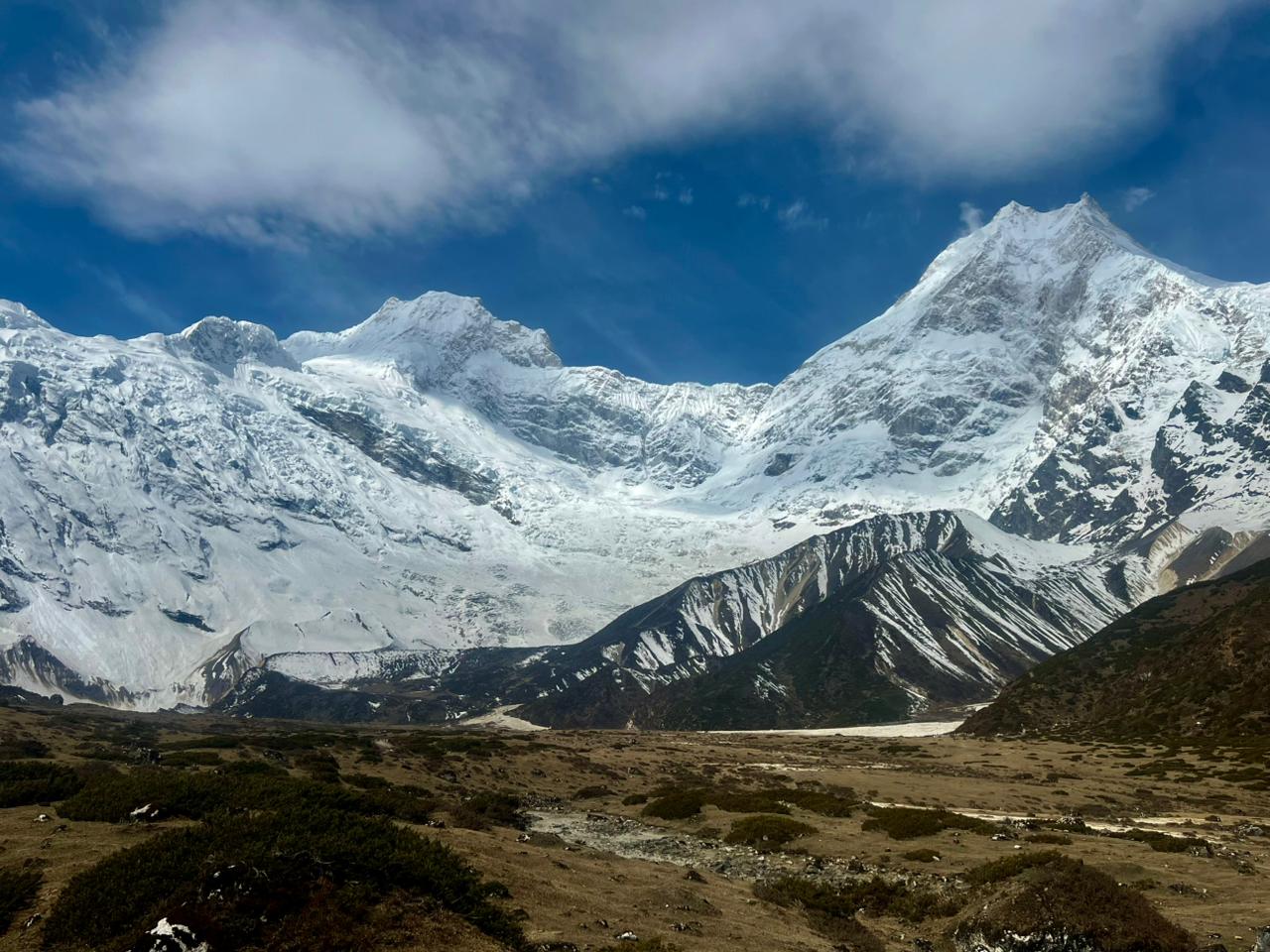
Manaslu, Nepal Best in Spring · Autumn
Manaslu Circuit Trek
Circle the world’s eighth-highest mountain on the 13-day Manaslu Circuit Trek. Follow the Budhi Gandaki through remote villages, experience Tibetan-influenced Himalayan culture and cross the challenging Larkya La Pass at approximately 5,106 metres
Duration
13 days
Maximum altitude
5,106 m / 16,752 ft
Difficulty
Strenuous
Guest rating
Not rated yet
From
$1,100
Why you'll love it
About the Manaslu Circuit Trek
# Manaslu Circuit Trek Overview
The Manaslu Circuit Trek is a 14-day, high-altitude journey around Mount Manaslu in the remote Gorkha region of Nepal. Mount Manaslu rises to 8,163 metres and is the eighth-highest mountain in the world.
Beginning with an overland journey from Kathmandu to Machha Khola, the trail follows the Budhi Gandaki River through subtropical valleys, deep gorges, suspension bridges and traditional mountain settlements. As the route climbs higher, the landscape changes into alpine pastures, glacial valleys and terrain shaped by the mountains surrounding the Nepal–Tibet border.
The journey passes through Jagat, Deng, Namrung, Lho, Samagaun and Samdo before reaching Dharamsala. The most demanding stage crosses Larkya La, commonly measured at approximately 5,106 metres, before descending to Bimthang.
After crossing the pass, the route enters the Annapurna Conservation Area and continues through Goa, Tilije and Dharapani. Ground transportation from Dharapani and Besisahar completes the circuit back to Kathmandu.
The Manaslu Circuit Trek is suitable for experienced hikers and physically prepared first-time Himalayan trekkers seeking remote landscapes, cultural encounters and a demanding mountain challenge.
# Why Choose the Manaslu Circuit Trek?
The Manaslu Circuit offers a quieter alternative to Nepal’s busiest trekking routes. Its restricted-area status and permit requirements help control access, while the long approach creates a sense of genuine progression through the Himalayas.
The route does not depend on a domestic mountain flight. Both the beginning and end of the journey are connected to Kathmandu by road, although road conditions and journey times can vary.
One of the trek’s greatest strengths is its diversity. The lower trail passes through warm river valleys, cultivated terraces and forested hills. Higher sections reveal Buddhist monasteries, mani walls, prayer wheels, yak pastures, glaciers and expansive mountain views.
The circuit also provides close perspectives of Manaslu, Himalchuli, Ngadi Chuli, Shringi Himal, Cheo Himal and other peaks along the border region.
# Manaslu Circuit Trek Difficulty
The Manaslu Circuit Trek is graded strenuous. Trekkers should be prepared for long walking days, basic accommodation, changing weather and sustained ascents and descents on uneven mountain trails.
The crossing of Larkya La is the most demanding day. It normally requires an early start and may involve eight to ten hours of walking over rocky moraine, snow or ice, depending on seasonal conditions.
No technical mountaineering experience is required under normal conditions. However, good cardiovascular fitness, leg strength, balance and mental endurance are important.
Preparation should include regular hiking, stair climbing, cardiovascular training and walking while carrying a light daypack. Training should begin at least six to eight weeks before departure.
# Larkya La Pass
Larkya La is the highest and most challenging point of the Manaslu Circuit Trek. It is generally measured at approximately 5,106 metres, although figures can vary slightly between maps and GPS readings.
The crossing begins before sunrise from Dharamsala. The trail climbs gradually over glacial moraine before reaching the prayer-flag-covered pass. On a clear day, trekkers can see Himalayan peaks and glaciers extending across the Manaslu and Annapurna regions.
The descent toward Bimthang is long and can be steep, particularly when snow or ice is present. Trekking poles and properly fitted boots provide valuable support.
The guide makes the final decision about crossing the pass after evaluating weather, snow, visibility, trail conditions and the health of every group member.
# Samagaun and Acclimatization
Samagaun is one of the most important cultural and acclimatization stops on the route. The village sits beneath Mount Manaslu and contains traditional stone houses, mani walls, monasteries and agricultural land.
The itinerary includes a full acclimatization day in Samagaun. Depending on weather, trail conditions and individual fitness, trekkers may hike toward Birendra Lake, Pungyen Gompa or Manaslu Base Camp.
Manaslu Base Camp is the most demanding option and reaches approximately 4,800 metres. Pungyen Gompa provides a more moderate alternative with excellent views of the surrounding mountains.
The purpose of this day is to improve acclimatization rather than simply reach the highest possible point. The guide selects the most appropriate activity for the group.
# Culture Along the Manaslu Circuit
The lower section of the trail passes through communities with diverse Nepali ethnic and cultural traditions. At higher elevations, settlements such as Lho, Samagaun and Samdo show a strong Tibetan Buddhist influence.
Travelers encounter monasteries, chortens, mani walls, prayer wheels and long lines of stones carved with Buddhist prayers. Local customs, language, architecture and traditional clothing reflect the region’s historic relationship with Tibet.
Trekkers should walk clockwise around monasteries, chortens and mani walls unless directed otherwise. Permission should be requested before photographing people, ceremonies or the interiors of religious buildings.
Staying in locally operated teahouses, purchasing regional products and respecting cultural practices allow trekking tourism to contribute more directly to mountain communities.
# Landscape and Wildlife
The Manaslu Circuit crosses multiple ecological zones. Lower elevations contain bamboo, pine and rhododendron forests, while higher areas feature alpine meadows, exposed moraine and glacial terrain.
The Manaslu Conservation Area provides habitat for wildlife including Himalayan tahr, musk deer, blue sheep and snow leopard. Birdlife varies according to elevation and season.
Wildlife sightings cannot be guaranteed, especially for rare and elusive species. Walking quietly and following the guidance of local staff can improve opportunities to observe birds and other animals without disturbing them.
# Best Time for the Manaslu Circuit Trek
The best seasons for the Manaslu Circuit Trek are generally spring, from March to May, and autumn, from September to November.
Spring brings gradually warmer temperatures, flowering forests and active climbing expeditions around Manaslu. Snow may remain around Larkya La during the early part of the season.
Autumn typically offers clearer mountain views and comparatively stable weather. October is particularly popular, so early booking is recommended because teahouse capacity is limited in the upper region.
Winter brings very cold temperatures and heavy snow can close Larkya La. The summer monsoon creates muddy trails, swollen rivers, landslide risks, clouds and transport disruptions.
Weather patterns vary each year. Himalera checks current route, road and pass conditions before every departure.
# Accommodation During the Trek
Accommodation is provided in locally operated mountain teahouses. Rooms are generally simple and include twin beds, mattresses, pillows and blankets.
Private bathrooms may be available at lower elevations but are uncommon in remote settlements. Shared squat or Western-style toilets are more typical in the upper region.
Heating is usually available only in the communal dining room. Bedrooms are not normally heated, so trekkers should carry a sleeping bag suitable for freezing temperatures.
Hot showers, Wi-Fi, battery charging and electricity may be available for an additional fee. These services become less reliable and more expensive at higher elevations.
# Meals and Drinking Water
Teahouse menus commonly include dal bhat, soups, noodles, potatoes, pasta, fried rice, eggs, Tibetan bread and seasonal vegetables.
Meal choices become more limited as elevation increases because food and fuel must be transported into remote settlements. Dal bhat is a practical trekking meal because it provides carbohydrates, vegetables and lentils.
Safe drinking water is available through teahouses and local sources. Trekkers should use a reliable filter, purification tablets or properly boiled water.
Single-use plastic bottles should be avoided whenever possible. Carrying two reusable bottles or a hydration system is recommended.
# Manaslu Circuit Permits
The Manaslu Circuit passes through a restricted area of Nepal. Foreign trekkers require a Manaslu Restricted Area Permit arranged through a registered Nepal trekking agency.
Trekkers also require the applicable Manaslu Conservation Area and Annapurna Conservation Area entry permits. TIMS requirements are confirmed according to the regulations applicable at the time of departure.
Restricted-area trekking must be organized through a registered agency and accompanied by a licensed trekking guide. Permit applications normally require at least two foreign trekkers traveling on the same approved itinerary.
Permit prices vary by season and by the number of days spent inside the restricted area. Himalera verifies the latest regulations and arranges the required permits before departure.
# Altitude and Acclimatization
The itinerary gradually climbs from the Budhi Gandaki Valley to settlements above 3,000 metres before crossing Larkya La.
Acclimatization days are included at Samagaun and Samdo. These days allow the body to adjust while completing controlled hikes to higher elevations and returning to sleep lower.
Symptoms such as persistent headache, nausea, dizziness, loss of coordination, breathing difficulty or unusual fatigue must be reported immediately.
Trekkers should never hide symptoms or continue ascending against the guide’s advice. Descending remains the most effective response when serious altitude illness is suspected.
# Safety and Travel Insurance
Every participant must have travel insurance covering trekking above 5,000 metres, emergency medical treatment, helicopter evacuation, trip interruption and cancellation.
The route passes through remote areas where road access and medical facilities are limited. Emergency evacuation can be expensive and may be affected by weather or visibility.
The guide may change the itinerary because of snow, landslides, trail damage, road conditions, illness, political disruption or other safety concerns.
Flexibility is an essential part of trekking in the Manaslu region.
# Who Is the Manaslu Circuit Trek For?
The Manaslu Circuit Trek is best suited to active travelers who enjoy remote landscapes, demanding walking days, simple accommodation and culturally meaningful journeys.
It is suitable for trekkers who can walk for six to eight hours on consecutive days and accept changing mountain conditions. Previous high-altitude experience is helpful but not mandatory with proper training and acclimatization.
The trek may not be suitable for travelers seeking luxury accommodation, short walking days or immediate access to modern medical facilities.
For prepared trekkers, the Manaslu Circuit provides one of Nepal’s most complete combinations of physical challenge, cultural depth and Himalayan scenery.
Trek highlights
Circle Mount Manaslu, the world’s eighth-highest mountain,
Cross the challenging Larkya La Pass at approximately 5,106 metres,
Follow the Budhi Gandaki River through deep gorges and mountain valleys,
Experience Tibetan-influenced culture in Lho, Samagaun and Samdo,
Visit ancient monasteries, mani walls and traditional Himalayan settlements
Spend dedicated acclimatization days in, Samagaun and Samdo
Hike toward Manaslu Base Camp, Birendra Lake or Pungyen Gompa,
See Mount Manaslu, Himalchuli, Ngadi Chuli and surrounding peaks,
Trek through the Manaslu and Annapurna conservation areas,
Stay in locally operated teahouses along a remote Himalayan route,
Cross suspension bridges above the Budhi Gandaki River,
Complete a high-altitude circuit without taking a domestic flight
Travel through subtropical forest, alpine pasture and glacial terrain
Descend from Larkya La into the beautiful Bimthang Valley
Experience one of Nepal’s most rewarding restricted-area treks
Day by day
The itinerary
Leave Kathmandu and travel west along the Prithvi Highway before turning toward the hills of Gorkha. Continue through Arughat and the Budhi Gandaki Valley to Machha Khola.
Walking8–10 hoursAltitude930 m / 3,051 ftMealsDinnerStayTeahouse lodge
- Prithvi Highway, Gorkha hills, Budhi Gandaki River, rural settlements, Machha Khola
Pro tips
- Carry water, snacks and motion-sickness medication because the final sections of the road can be rough and dusty.
Transparent pricing
What's included
Included
- Pre-trek briefing and equipment review in Kathmandu
- Ground transportation from Kathmandu to Machha Khola by public bus
- Ground transportation from Dharapani to Besisahar by sharing jeep
- Ground transportation from Besisahar to Kathmandu by tourist bus
- Twin-sharing teahouse accommodation during the trek
- Three meals per day during the trek
- Licensed English-speaking trekking guide
- Assistant guide for groups of eight or more trekkers
- Porter service based on two trekkers sharing one porter
- Manaslu Restricted Area Permit
- Manaslu Conservation Area entry permit
- Annapurna Conservation Area entry permit
- TIMS card if required under the applicable regulations
- Guide and porter wages, meals, accommodation and transportation
- Government taxes and official service charges
- Basic first-aid kit carried by the trekking guide
- Water purification assistance during the trek
- Himalera duffel bag for use during the trek
- Trekking route map
- Manaslu Circuit Trek completion certificate
Not included
- International airfare to and from Nepal
- Nepal entry visa fee
- Airport transfers and Kathmandu hotel accommodation
- Breakfast, lunch and dinner while staying in Kathmandu
- Travel, medical, evacuation and trip-cancellation insurance
- Personal trekking clothing and equipment
- Sleeping bag and down jacket unless separately arranged
- Hot showers, Wi-Fi, battery charging and electronic device use
- Bottled water, soft drinks, alcoholic beverages and additional snacks
- Personal expenses and optional activities
- Emergency helicopter evacuation or additional transportation
- Extra accommodation and meals caused by weather or itinerary changes
- Costs resulting from illness, injury, landslides, road delays or natural events
- Tips for trekking guides, assistant guides, porters and drivers
- Services not specifically listed under inclusions
Availability
Upcoming departures
ExpeditionDepartsDurationSpotsStatusBook
Reserve your place
Ready for Manaslu Circuit Trek?
Choose your trip style, departure, group size, and add-ons on the next step. We confirm availability before requesting payment.
20% deposit
$220
then $880 due 30 days before departure
Next departure
23 Oct 2026
Plan your Manaslu Circuit Trek
Practical background from our Nepal trekking guides to help you prepare for this route.
- Trekking in the Manaslu region Access, character and other routes in this region.
- Altitude and acclimatisation How to ascend safely and recognise altitude sickness.
- Best time to trek What each season means for this kind of route.
- Compare Nepal treks See how this route compares with Nepal's other classic treks.
More treks in Nepal
From
$1,100 · 13d